|
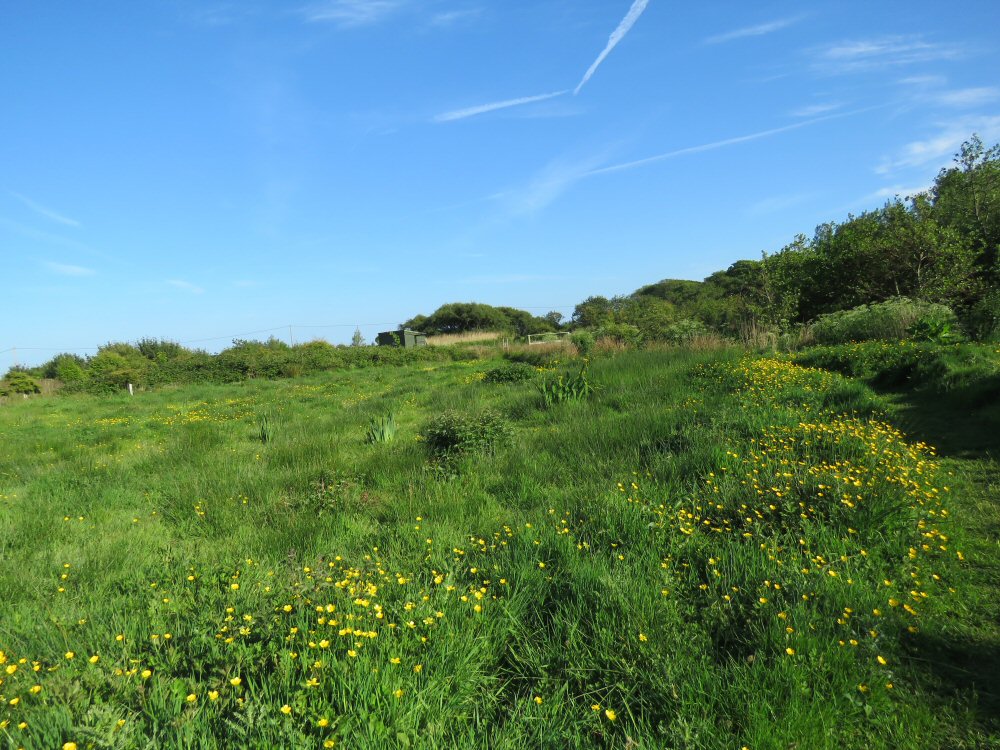
| Lush June Reserve |
Birds: (hard to spot now the trees are in full leaf!)
SC210694 Great Tit family "keeping in touch" calls heard but no birds seen.
SC209693 Blackbird heard but not seen. Sedge Warbler heard but not seen.
SC208694 ( near dam) Wren; Chiffchaff heard but not seen.
SC209695 ( near orchard entrance) Great Tit family "keeping in touch" calls heard but no birds seen.
SC209695 ( near stream inlet pipe) 2 x Whitethroat together;
SC209694 Chaffinch, Willow Warbler, both heard but not seen.
SC209694 ( hide) House Martin, male and female Blackbirds; Chiffchaff heard but not seen.
SC208694 ( willows) Great Tit; male Chaffinch.
SC209694 ( path junction) Willow Warbler in willows
Butterflies & Moths:
SC210694 ( near entrance) Red Admiral
SC209694 ( near Ginnie's bench) 2 x Small Copper having a territorial dispute, one much paler than the other.
SC209695 ( near orchard entrance) Speckled Wood
SC208694 ( willows) Speckled Wood; 2 x Carpet Moths ( unfortunately I didn't get a photo and only had a brief sighting, so unable to identify)
SC209694 ( gorse boundary) unidentified Micro Moth
SC209693 ( path parallel to road) Speckled Wood
SC209694 ( near hide) unidentified Micro Moth
SC209694 ( wild flower meadow) Small Heath
Caterpillars:
SC210694 Garlic mustard plants have several Orange Tip Butterfly caterpillars.
SC210694. SC209693 and throughout reserve - Depressaria daucella caterpillars (moth) on Hemlock Water Dropwort. See http://www.ukmoths.org.uk/species/depressaria-daucella for photo of adult moth.
SC209694 (gorse boundary) there are black caterpillars on the nettles, probably Small Tortoiseshell.
Ladybirds:
SC210694 (near entrance) 7-spot Ladybird
SC210694 (near entrance) at least 9 x larvae of 7-spot Ladybirds
SC208694 (near boardwalk) several Ladybird larvae, mostly 7-spot but also a couple which may be different (seeking advice)
SC208694 (near boardwalk). There were also a couple of 7-spot Ladybird pupae.
Ladybirds lay yellowish-orange eggs in clusters, often on the underside of leaves. They can be found in spring and early summer. It takes the eggs about 4 - 10 days to hatch into larvae which feed for about 3 to 5 weeks before pupating. The larvae shed their skins as they grow, going through 4 stages, the last of which pupates. It takes roughly a week for the pupa to turn into a Ladybird which emerges as the new generation, fully grown. [Information taken from FSC fold out guide to the Ladybird Larvae of the British Isles]
Plants:
SC210694/SC209694 (wildflower area near Noticeboard) there are at least 8 Yellow Rattle plants in bud here which hopefully will seed in this area and reduce the fertility of the grass year on year.
SC209694 ( by hide bridge) Common Valerian and Red Campion in flower;
SC209694 ( wildflower area) There is a large Marsh thistle in bud here ( butterfly food plant)
SC209694 (Pond) Brooklime in flower in pond
SC209694 ( path junction) new Alder cones forming
SC209694 ( Ginnie's bench) Cherries on memorial tree
SC209694 ( Ginnie's bench) Elderberry in full flower
SC209694 ( Wildflower area) Meadowsweet in bud
SC210694 ( entrance) Several garden escape poppies in bud near gate
SC208695 ( Beehive loop) Rowan berries starting to redden up
SC210694 (Noticeboard) Ox-eye daisies in full flower and attracting a variety of insects
SC208694 & SC209694 Reed beds - the reeds continue to grow rapidly
Other:
SC208694 ( near dam) 3 x Gorse Shieldbug
SC209694 ( gorse boundary ) 3 x Gorse Shieldbug
SC210694 ( near entrance) tiny flies on the Burdock plant are Tephritis bardanae, which have elaborate courtship rituals entailing a lot of semaphore messages with wings.
SC209693 ( path parallel to road) Soldier beetle
SC209693 ( path parallel to road) female damselfly, Common Blue I think.
SC210694 ( near entrance) juvenile Garden Snail
SC208694 ( Willows) Black Thistle aphids
SC208694 ( dam) Two bird pellets on bridge. Composition seemed to be different? Meant to bring home for dissection but forgot!
SC208694 ( Willows) Unidentified Hoverfly
SC208694 ( near boardwalk) Wolf spider carrying egg sack
SC209693 ( parallel to road) Orange-yellow lichen on twigs here and elsewhere.
I used to think that Lichen was a sign of clean air but in fact some are tolerant of Sulphur Dioxide and Nitrogen. In the past coal burning/industry was the main pollutant causing Sulphur Dioxide & Acid Rain but apparently these days nitrogen compounds caused by intensive farming activities are becoming the main pollutant . The yellow coloured lichen may be an indicator of this. [FSC fold out guide to Lichen on Twigs]
 |
| Wolf spider carrying egg sack |
 |
| 7-spot Ladybird larva |
 |
| and another - looks like a mini dinosaur! |
 |
| they were everywhere |
 |
| I thought this one only had 2 rather than 4 spots on its back but on screen you can just see 2 more paler spots I think |
 |
| buttercup flower gives and indication of its size |
 |
| This is the Ladybird pupa |
 |
| here is a close-up of a pupa |
 |
| ox-eye daisies attract many insects |
 |
| a couple of examples |
 |
| an interesting fly |
 |
| some sort of Hoverfly |
 |
| ...all the better to see you with, my dear! |
 |
| male chaffinch |
 |
| Depressaria daucella moth caterpillar - just emerging ? |
 |
| most of the Hemlock Water Dropwort plants seem to have them |
 |
| I've noticed that at night they go to bed in the heart of the flower heads |
 |
| jeepers, creepers, where d'you get those peepers? ......where d'you get those eyes? Aren't they amazing! |
 |
| unidentified Micromoth |
 |
| Same species elsewhere? |
 |
| Soldier beetle on thistle |
 |
| Small Copper |
 |
| and its paler rival |
 |
| Speckled Wood |
 |
| Small Tortoiseshell Caterpillar |
 |
| Orange Tip Caterpillar |
 |
| chomping through the Garlic Mustard |
 |
| Well camouflaged on the seed heads and easily missed |
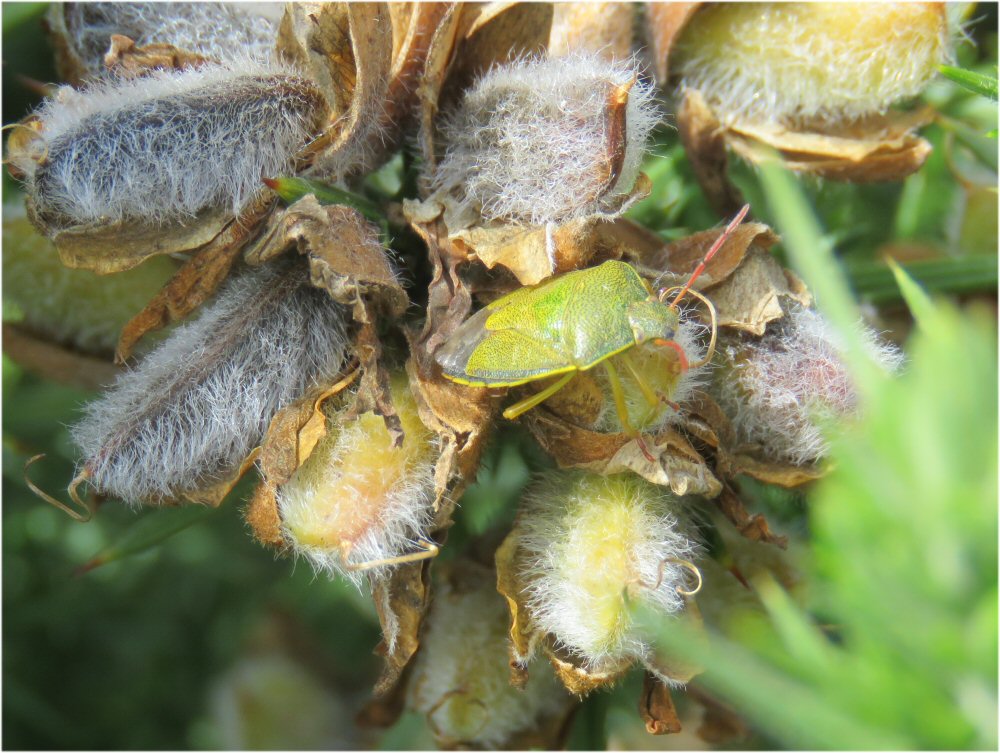 |
| Gorse Shieldbug |
 |
| Tiny Tephritis bardanae fly on Burdock plant. |
 |
| Small Garden Snail and friend |
 |
| Two pellets possibly left by two different species of bird? The contents look different |
 |
| If this is Xanthoria lichen then it can indicate nitrogen in the atmosphere |
 |
| Gorse Shieldbug ( but not on gorse) |
 |
| Female damselfly |
 |
| Black aphids on thistle. Once the 7-spot Ladybirds emerge from the pupae these could be in danger of being eaten! |
 |
| new cones on Alder |
 |
| Cherries - welcome food for the birds later |
 |
| Brooklime in flower |
 |
| Common Valerian |
 |
| Lovely frothy elderflowers |
 |
| Marsh thistle, beloved by some butterflies |
 |
| The Meadowsweet will soon look wonderful in the wildflower meadow |
 |
| Poppy - I think they were purple last year??? |
 |
| Rowan berries coming along nicely. Look out for Hawthorn Shieldbugs and their larvae |
 |
| Reeds growing really fast now |
 |
| Yellow Rattle should help reduce soil fertility, making life easier for other wild flowers to out compete the grass. |
 |
| Phew! The Turf roof is greening up again after the drought. |
 |
| A view through the willows with lovely red Sorrel flowers in the foreground. Caterpillar food plant of those Small Copper butterflies seen elsewhere on the Reserve |
 |
| Waterlilies |
 |
| A lovely wild rose near the entrance |
 |
| and a close-up of a flower. |